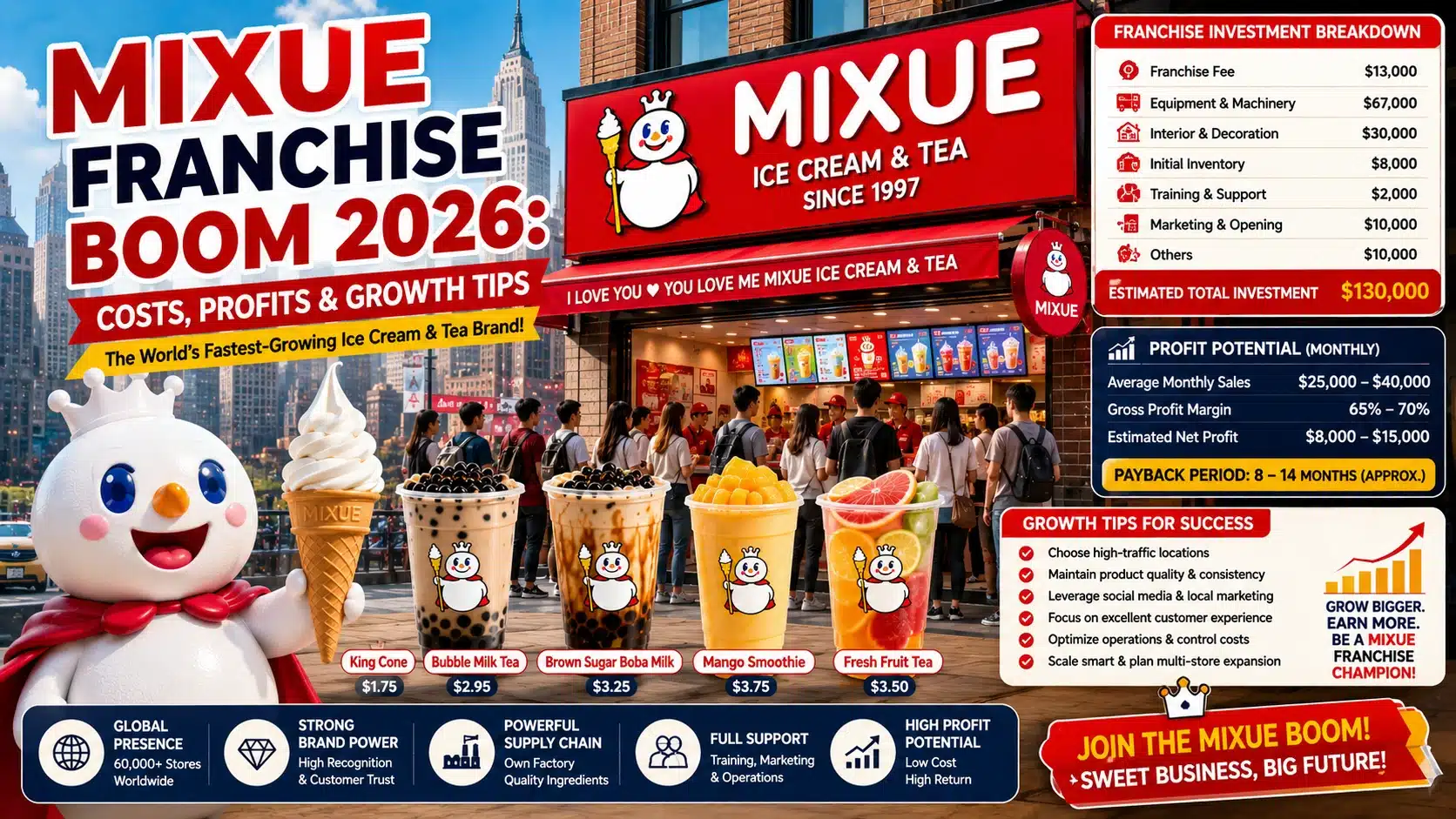
Mixue is popping up everywhere, and people are asking why. This ice cream and tea chain launched in China, and now finds itself on just about every busy street corner throughout Asia. It continues to grow rapidly in 2026, and more investors want in on the action. In this guide, we will have an overall breakdown of how much it really costs to start a Mixue store. This also examines profit potential, growth strategies and why Mixue NYC is emerging as one of the hottest talked-about franchises for the U.S. So grab some tea and come join me.
Why Mixue is So Popular Right Now
Heavily cheap, delicious ice-cream and bubble tea is what Mixue built its reputation on. In some markets, a cone costs less than a dollar, yet the brand makes healthy margins via volume. The pricing model brings massive crowds day in and day out. The company has thousands of locations worldwide. Many of these would be franchise locations, not corporate owned shops. It allows Mixue to open rapidly without using significant amounts of its own cash on property and labor. Social media loves Mixue too. The mascot in the shape of a snowman pops up on memes, dance videos, unboxing videos on TikTok and Instagram. Such free marketing makes it mature, but requires little money on advertising.
Why Mixue Is On Investors’ Radar
Franchise buyers love predictable numbers and Mixue delivers. It keeps the menu simple, the training period short, and the supply chain flowing through its own factories. It keeps quality consistent regardless of the location of a store. Small investors also appreciate that Mixue does not need an enormous shopfront. A shop could be run from a little kiosk or a narrow street unit. That reduces the upfront rent tab versus traditional sit-down restaurants.
How a Mixue Store Really Costs
Prices may differ in each country (for example — in Spain you have to pay around 300 000 euros for 1 hectare of seawater) but the general trend is the same. The cost is the franchise fee, a down payment, equipment costs, renovations, and initial inventory. Sprinkle in a couple of months of working capital, and you have a complete view. In China, its domestic market, Mixue intentionally keeps fees as low as it can. It was this strategy that allowed the brand to expand to thousands of stores in small towns and rural areas. Overseas, duties also push fees up, since shipping, domestic guidelines, and rents differ.
We have a simple table below to illustrate the average cost ranges for a Mixue franchise from three different regions. These numbers are rough estimates and can vary based on city, store size, and up-to-date currency exchange rates.
| Cost Item | China (Estimate) | Southeast Asia (Estimate) | USA / Mixue NYC (Estimate) |
| Franchise Fee | $1,500 – $3,000 | $3,000 – $6,000 | $8,000 – $15,000 |
| Store Setup & Equipment | $10,000 – $20,000 | $15,000 – $25,000 | $30,000 – $60,000 |
| Renovation & Signage | $5,000 – $10,000 | $8,000 – $15,000 | $20,000 – $40,000 |
| Initial Inventory | $2,000 – $4,000 | $3,000 – $5,000 | $5,000 – $10,000 |
| Working Capital (3 months) | $3,000 – $6,000 | $5,000 – $8,000 | $15,000 – $25,000 |
| Total Estimated Investment | $21,500 – $43,000 | $34,000 – $59,000 | $78,000 – $150,000 |
As you can see, a Mixue NYC store is significantly more than one in a smaller Asian location. Rent alone can take a huge piece of the pie in any part of New York. Even so, plenty of buyers believe the brand name recognition makes the increased price tag worthwhile.
Hidden Fees You Should Ask About
Franchise Costs that Lie Low in the Fine Print One thing that is frequently left off from early discussions are provisions relating to royalty fees, marketing fund contributions and software licensing fees. Before you sign anything, always ask for the full blown disclosure document. Utility deposits, staff training travel, and local business licenses, can really add up fast. What a smart buyer does is buffer with extra cash before opening day. This cushion helps fill in the slow weeks of the early weeks of establishing a local presence for the store.
Mixue NYC: Expansion Strategy in the United States
Mixue in New York City is a great realistic glimpse of how the brand may do stateside outside of Asia. It has heavy foot traffic, a variety of food preferences and eager demand for low-cost snacks to satisfy. As such, this all serves as a natural test bed for the brand. Millaise Mixue NYC locations saw long lines in its opening weeks. A big part of that initial rush is curiosity, as many New Yorkers had already seen the brand on the Web before it landed in stores here. And then the word of mouth carries forth after the initial clickbait effect has been used up.
Land prices in New York make for rent multiples astronomically higher than in nearly all Asian cities, which alters the math for owners. This level of guaranteed minimum income is obligatory for Mixue NYC franchise owners but still a fraction of what you need to trade every day to break even at your base rent. It is for this reason why scoping a good location is important in this business.
Lessons Other Cities Can Learn From Mixue NYC
Other US cities are closely studying what happens at Mixue NYC before taking the plunge themselves. The New York stores continue to do well, and that should speed up expansion in places like Los Angeles, Chicago and Houston. Having a big success in one hot market does give the franchise confidence to expand into other places. Local taste matters too. Mixue NYC stores also made some menu tweaks to satisfy American taste, such as adding toppings. Simple changes like these can go a long way towards keeping customers happy.
Growth Tips for Anyone Considering a Mixue Franchise
It takes some planning to grow a Mixue store into a small chain. The best multi-unit owners view their first location as a training opportunity. You learn the systems ahead of time so that you can fix the little problems while they are still little and then scale big with confidence. Never rush through location research. Factors like foot and vehicle traffic counts, as well as proximity to other competitors and local demographics all play a role in how quickly a new location will become profitable. Walking around the block at different times of the day tells you a lot before you ink that lease.
Staff training has a direct impact on the customer experience, so it not only deserves attention, but real attention. While Mixue’s recipes are uncomplicated, consistency requires practice. When a team is properly trained, it pours drinks more quickly and accurately, which keeps lines moving during peak times.
Marketing Moves That Actually Work
Social media posts performed much better than paid ads for a brand like Mixue. Videos of the store, the menu and satisfied customers have historically gone viral in neighboring neighborhoods. It is cheap to make and generates a huge amount of breathless local hype. It can also attract consistent foot traffic by teaming with neighboring offices, schools, or gyms. This is going to attract new customers who might not even have noticed the store as it has a very basic discount code for a nearby company. Little deals that build loyalty in the long run in the neighborhood.
Seasonal menu items offer an incentive for the customer to revisit frequently. This works because a limited-time flavor incentivizes immediacy, and creates plenty of buzz. This is something that Mixue has executed very well within Asia and something that proves to be just as viable an option with cases like Mixue NYC.
Frequently Asked Questions
How much does it cost to open a Mixue franchise?
Pricing varies by country, with costs approximately $20,000 in China and over $100,000 in the U.S. This varies greatly by local rent, the size of the store, and equipment costs in that area. Always ask for the entire franchise disclosure document for actual figures.
Is Mixue NYC profitable for franchise owners?
Due to the rent and labor costs in NYC, for Mixue NYC to be profitable, it would need to sell well daily. Chained footfall spots bring owners the best profit. Strategy: Keep close control on costs to make a big impact on overall profit.
How long does it take to open a Mixue store?
The majority of Mixue franchise stores are opened within 2 to 4 months after signing the contract. This comprises approving a site, completing renovations, installing equipment, and training staff. If permits or shipments of supplies are delayed, that could cause delays.
Will I get training and support from Mixue as a franchise owner?
Yes, Mixue has training on their recipes, equipment and the regular workings of a store. The company also provides marketing resources and supply chain support. This enables new owners to come in with confidence without a food industry background.
What makes Mixue different from other bubble tea franchises?
Mixue goes for low prices and high turnover, so profit margins are stable despite low prices on menu items. In addition, supply factories indirectly control costs and quality of ingredients. Mixue has a leg up on most smaller competing brands because of this.
Conclusion
Mixue offers a real chance for franchise buyers who want an affordable entry into the food and beverage world. Startup costs stay low compared to many other food franchises, especially outside major US cities. Profit margins look solid when owners manage inventory and staffing well. Mixue NYC shows both the promise and the challenge of bringing this brand to a bigger, more expensive market. Higher rent and labor costs mean owners need strong sales volume to succeed. Still, the brand’s growing fan base and low price points give it a real shot at long-term success in the US.